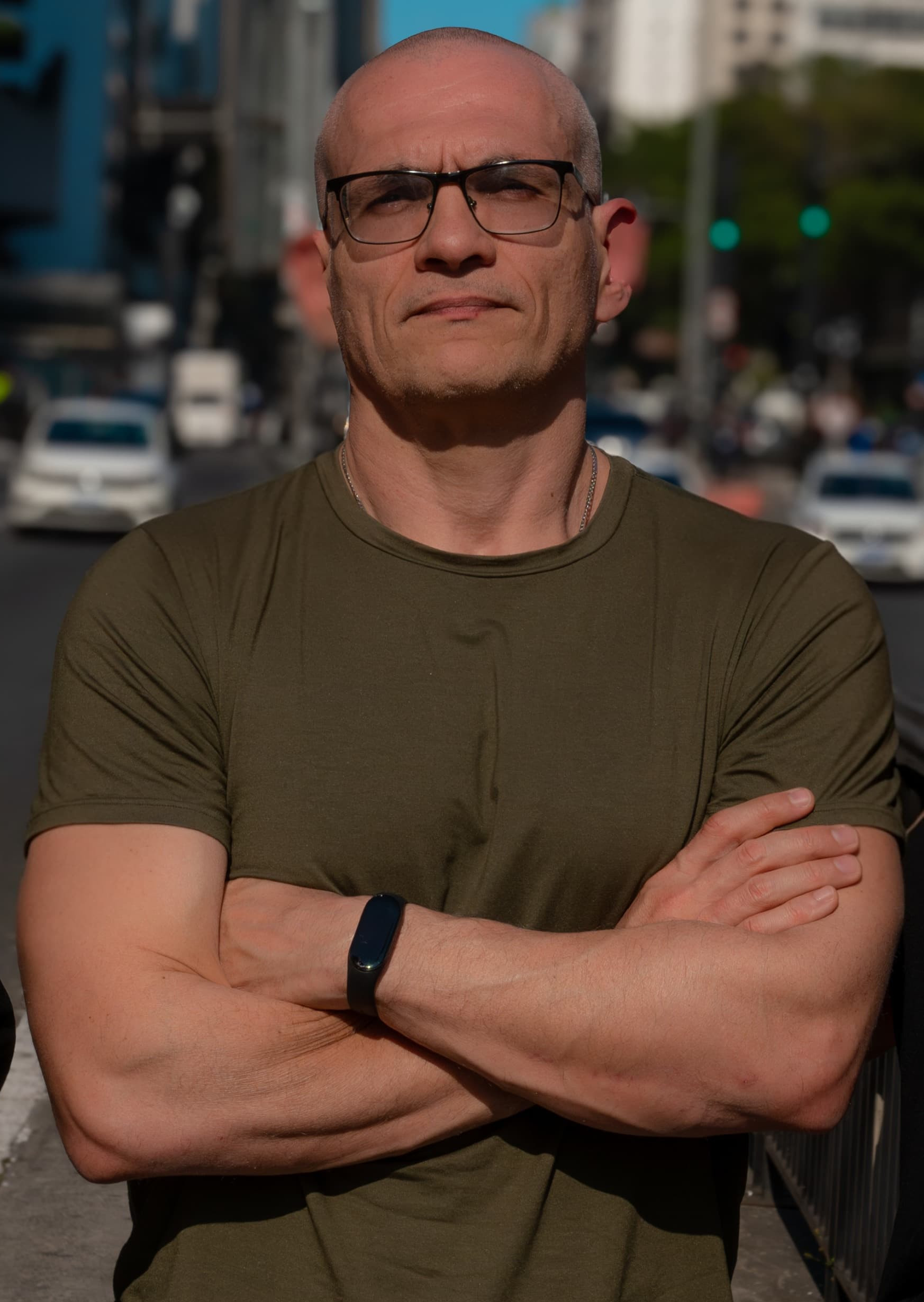
Dr. Aydamari Faria-Jr

about AI and Medicine

Science, teaching and critical judgment to use AI in health care responsibly.

AI and Medicine emerges from the convergence of scientific training, university teaching, learning, clinical reasoning and critical analysis of the real impact of artificial intelligence in health care.

// trajectory

Aydamari Faria-Jr

Biomedical scientist, MSc in Neuroimmunology, PhD in Physiology, Neurosciences professor at UFF and fifth-year medical student.

My work combines cognition, education, clinical reasoning and critical analysis of the impact of artificial intelligence on health care.

More than commenting on technology, the point is to translate real implications: what AI changes in medical education, clinical practice, communication with patients and institutional decisions.

// editorial stance

Beyond hype

Learning and practice without shortcuts: less hype, more method; fewer vague promises, more responsible evidence-based application.

That translates into critical analysis, technical curation, educational product design and training applied to professionals and institutions that need to use AI in a consistent, ethical and clinically useful way.

The goal is not to replace professional thinking, but to qualify its application in real context, including knowing when to use AI and when not to use it.

// areas

Workstreams

  • Digital products for clinical practice and teaching.
  • Institutional training and consulting.
  • Lectures, workshops and event participation.
  • Individual mentoring for responsible implementation.

// highlights

Public credentials

  • TEDx Speaker and invited lecturer across different institutions.
  • Professor and researcher focused on cognition, education and AI in health care.
  • Author of the AI and Medicine newsletter on Substack.
  • Frequent presence in podcasts and public debates.

// principle

What guides this work

Our patients are not products. Technology in health care must answer to context, safety, clinical judgment and responsibility.

Patients are not exam questions. Learning, teaching and implementing AI require rigor, prudence and commitment to real-world application.