Master AI in your professional practice
This is not generic prompt coaching. It is a curated path for people who need to use AI with judgment, accountability and real clinical relevance.
AI assistants can amplify productivity, but they also amplify confusion when used without criteria. Poor prompting is not the real problem; weak framing, lack of domain judgment and misplaced trust are.
The work is built on neuroscience, education and evidence-based thinking, not on tool enthusiasm alone.
This is not generic prompt coaching. It is a curated path for people who need to use AI with judgment, accountability and real clinical relevance.
- Clinicians and health professionals For people who need practical use cases without compromising responsibility or clinical reasoning.
- Educators and academic leaders For professionals working at the intersection of learning, cognition and AI-enabled educational design.
- Decision-makers: For leaders who need better questions, better framing and less hype before acting.
The risks below are real, and they are part of AI use in health care settings:
- Generic and imprecise results: outputs that do not meet the standards of health care work.
- Hallucination and misinformation risk: AI can be wrong, and often is. Understanding how and why that happens is essential.
- A constant sense of wasted time: spending hours to obtain an answer that still lacks practical meaning because the prompt was poorly framed.
- Data security: patient-sensitive information cannot simply be exposed to AI systems. Responsible use in health care includes knowing how to work inside privacy and governance constraints.
- Pressure from novelty and fear of obsolescence: many leaders face the "shiny new toy" trap, where everything is expected to include AI and solve every problem. That is not true. Understanding what AI is actually good for is what enables more centered, prudent and cost-effective decisions.
These risks are real, but they are manageable, and that is precisely where the mentoring focuses. Each challenge is addressed according to your needs and the depth that your context requires.
The mentoring should be understood as a professional learning path tailored to your needs and technical level. Together we define what you actually need to learn, how to approach it and how to balance theory with application instead of relying on generic recipes.
Examples of what you can build:
- Safer clinical workflows: Use AI to support reading, synthesis, explanation and structured reasoning without outsourcing responsibility.
- Better educational material: Create teaching resources, study routines and review strategies with higher cognitive quality.
- A real decision framework: Learn where to trust, where to verify and where to refuse automation.
- Fully tailored: the content is built around your goals and current maturity level.
- Grounded in your real practice: every example and use case starts from your professional reality.
- Practical and actionable: every topic is handled with direct application in mind.
- Future-facing: you learn how to keep learning as the tools evolve, instead of depending on temporary recipes.
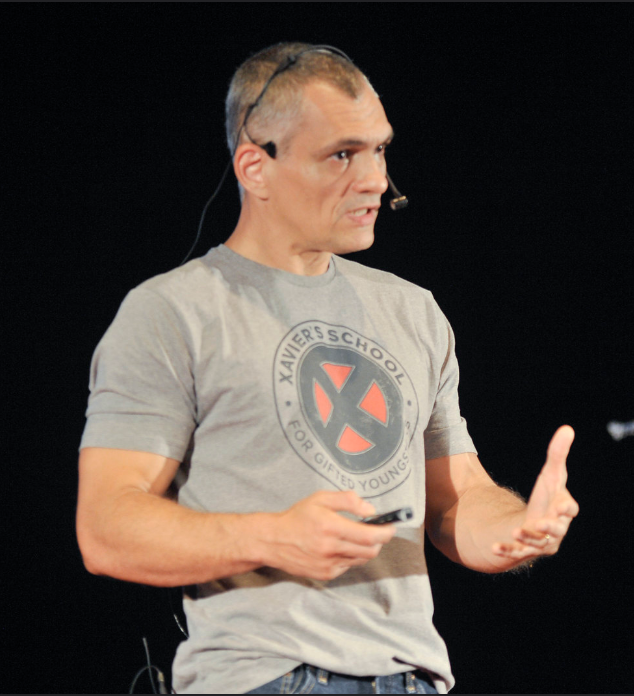
My name is Aydamari Faria-Jr. I have been a professor at the Federal Fluminense University for more than a decade. My academic background includes a PhD in Physiology from UFRJ, a research period at the University of Granada, an MSc in Neuroimmunology from UFF, and many years of study and teaching.
Scientifically, my work began with attention as a cognitive function and later moved toward memory, learning and neuroeducation. That path also led me to two current research questions: what is the impact of AI on cognition and learning, and what is its impact on medicine and health care?
More important than degrees alone is the fact that I use AI daily across teaching, research, medicine and content work. You can follow part of that trajectory through the newsletter and the podcast archive linked throughout the site.
The mentoring itself is a direct extension of the importance I assign to AI literacy: people need to learn how to use AI with technique and responsibility, because it is now part of professional reality.
Ready to begin?